
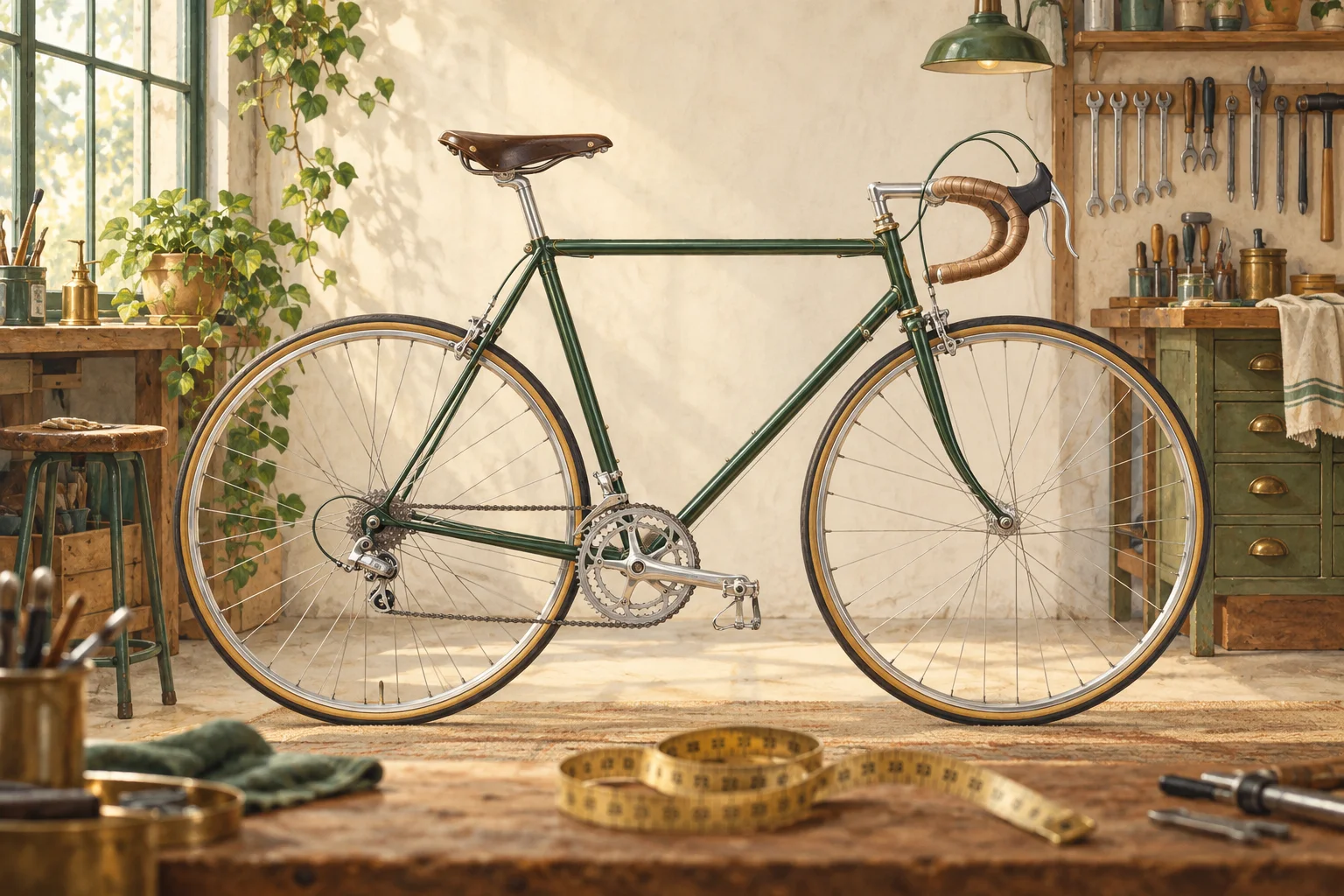
Start with the measurement, not just the size label
A frame advertised as 54 cm gives you a starting point for a conversation. It does not tell you the complete geometry, how the measurement was taken or whether the bicycle will fit your riding position. When comparing two listings, ask for the same measurements in the same units.
Build a short measurement sheet for a bicycle you already find comfortable. Record the frame measurements separately from adjustable settings such as saddle height and handlebar position. This makes it easier to ask useful questions about a prospective purchase.
Ask how the seat tube was measured
For a traditional frame, a seller may describe a seat tube length measured from the center of the bottom bracket to the top of the seat tube, or to the center of the top-tube junction. These are different endpoints. Ask which method was used rather than assuming two size labels are directly comparable.
Request a photograph showing the tape and both endpoints. Keep the tape aligned with the tube being measured. If the top tube slopes, ask for the manufacturer’s geometry chart when available; do not assume a tape measurement is the same as the model’s nominal size.
Compare the effective top tube and standover
Effective top tube describes a horizontal comparison between the head-tube area and seat-tube axis; it is not necessarily the length along a sloping tube. Ask the seller to identify the points used. Standover is the vertical distance from the ground to the top of the frame where you stand over it. Record where that reading was taken.
These measurements help you compare bicycles, but neither is a complete fit prescription. Your proportions, riding position and the fitted components also matter. If a comparison is close or you have fit concerns, a bicycle fitter can help interpret the dimensions.
A measurement request you can send to the seller
A precise request saves back-and-forth messages. Use the following list and ask the seller to mark unavailable measurements as unknown.
- Seat tube length, with the measurement method and endpoints.
- Effective top tube length, identifying how it was measured.
- Standover height, including the location of the measurement.
- A side-on photograph of the complete bicycle and close photographs of size markings.
- The stem length and current saddle-height measurement, with endpoints, if you are comparing positions.
Use the numbers to decide what to ask next
Record the answers beside your reference bicycle and highlight the differences. Do not turn a single measurement into a guarantee that a bike fits. If the seller cannot confirm an important dimension, request a measurement or arrange an in-person assessment before ordering.
Keep the measurements with the listing photographs. They provide a clearer basis for your decision than a general statement that a bicycle suits someone of a particular height.
Further reading
These references provide additional background. The checklists above organize questions to ask a seller; they do not replace a professional fitting or mechanical inspection.
A question about an actual bicycle?
Send the listing name and the measurements, component details or delivery information you would like confirmed.
Ask the seller →Created with AI assistance. Cover illustration generated with AI. No independent product test, inspection or certification is claimed.